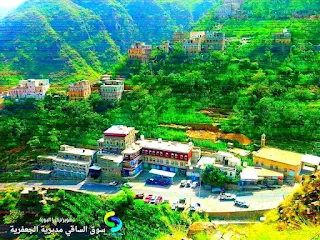
The region of Raymah is considered one of the important historical theaters, as events took place in it since the pre-Islamic period, and the informants indicated that the history of Raymah dates back to (the third century BC), and this is the oldest reference to it, and “Al-Hamdani” believes that the first home of the Yemeni man was in this Al-Baqa’a is where the site of “Shajban” is located, which is the boundary between the Makhlaf of Jablan and the Makhlaif west of Dhamar, and to which “Ishjad bin Qahtan” is attributed. Likewise, “Al-Hamdani” stops at it for a long time in more than one place, describing its mountains, forts, and archaeological areas therein, and enumerates its valleys as well as describing its strife, its tribes, and its agricultural production. and animal, and still surprises its visitors and receives them in the form of an artistic painting of exquisite beauty adorned with the intertwining of mountains covered with greenery and wonderful beautiful terraces inviting its visitors to climb to embrace the clouds, and its terraces bear trees full of abundant goodness of fruits and grains and harmonize with the music of birds such as the cooing of bulbuls and the chirping of birds and the sound of warm springs and the humor of the gentle breeze And the wonderful artistic painting is complete when watching what is unique to its beautiful villages scattered on the tops of the mountains, preserving the traditional character of the Yemeni environment and what is distinguished by the old houses and the authenticity of the house. The simple and homogeneous Yemeni person with the picturesque nature completes the artistic painting.
One of the inscriptions found in Jabal al-Dumer showed Rimah as one of the states of the Qataban state, and in it a tribe that follows the children of (uncle) - the god (uncle) the official god of the state of Qataban - and it is the tribe (Ajam), and that inscription mentioned the existence of two temples in Mount Al-Dumer belongs to the god (Am), and the control of the Qatabanid state over Rimah meant surrounding the Sabaean valley of Jahran from its three eastern, southern and western sides, and thus stopping the Sabaean settlement to the south in the plateau, in the city of Dhamar, and to the west in Shibam Kawkaban, this is from one side, but from the other side, the The Qatabani state's control over Raymah is considered as part of its plan to protect the coasts of the Red Sea, which was under its authority, but the lack of archaeological studies in Raymah made us ignorant of many of its roles in pre-Islamic times. The Sabaeans and then the Himyarite state against the Abyssinians who controlled Tihama and the coasts of the Red Sea, then Rimah played - also - in the Islamic period and until the modern era, important roles, and many events took place on its lands, and those lands in the late period were coveted by many From the tribes of Yemen, such as Khawlan and others, and families and families moved to them; The reason for this is the fertility of those lands and their remarkable reputation for the abundance of livestock, especially cows, in addition to the presence of bees, which produce large amounts of honey, for which Rimah has been famous since ancient times.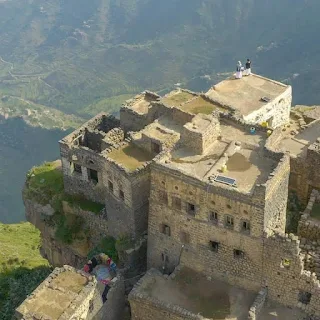



Comments